
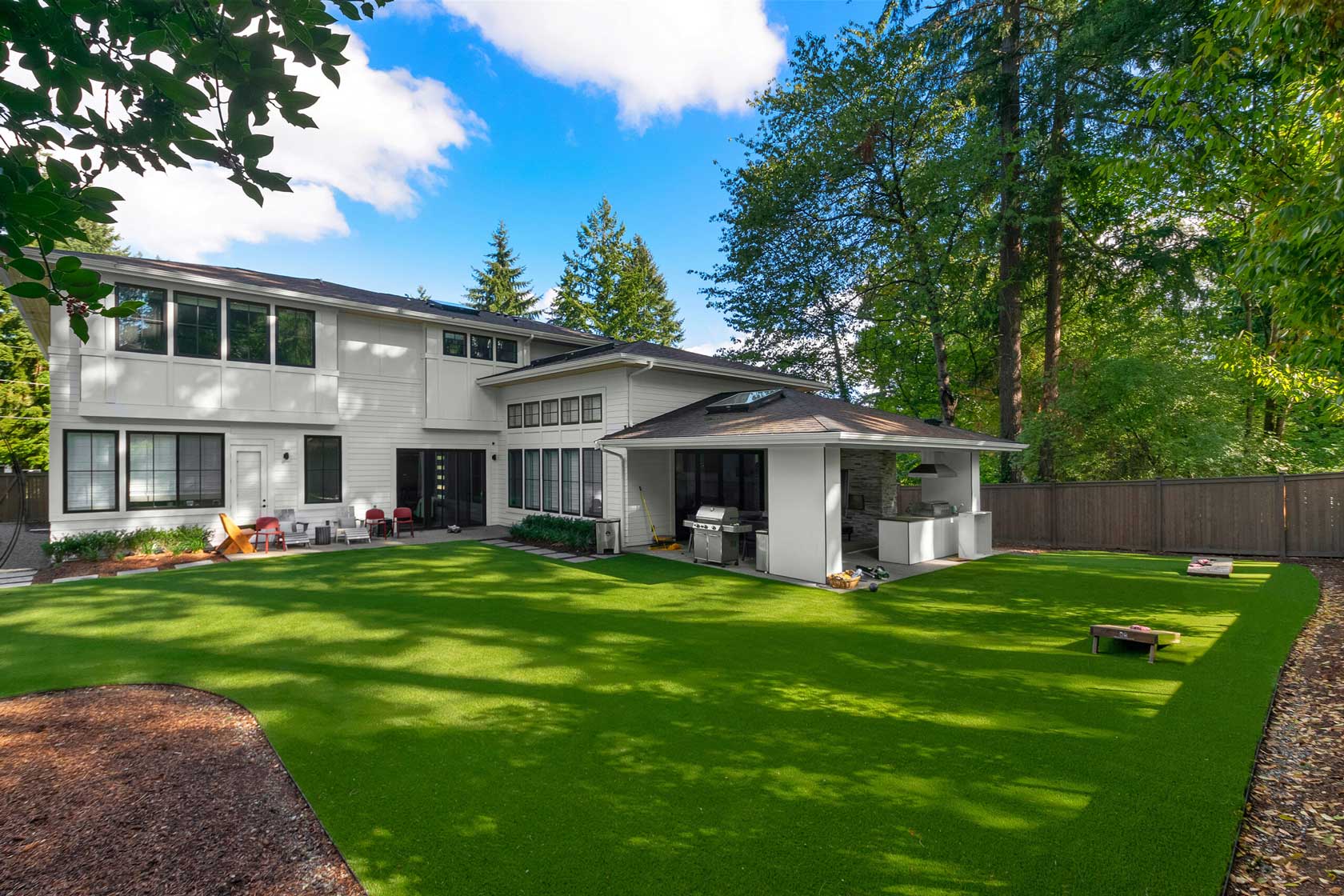
Synthetic turf is not a small home improvement project. The average installation costs $5,785, though homeowners can pay anywhere from $1,300 to $15,000. Materials are $2 to $8 per square foot, and excavation, weed barriers, drainage systems, and edging are another $150 to $600. As such, you want everything to benefit you now and, in the future, especially if you decide to sell your property.
So, is artificial turf an investment, or just an expense?
At Synthetic Turf Northwest, we believe artificial turf ROI depends on many factors.
The Meaning of Curb Appeal and Low-Maintenance Landscaping
For today’s homebuyers, first impressions matter a lot. Before one sees the living room, kitchen, or one of the bedrooms, they see the front yard first. Simply put, curb appeal is crucial. It could involve a healthy-looking lawn, neatly trimmed plants, clean walkways, and a welcoming entrance. Think about outdoor lighting, planters, a well-maintained garage door, a spotless driveway, and even a tidy mailbox as well.
When your property looks attractive and well-cared for from the outside, it creates a positive overall impression. Of course, if keeping a yard thriving becomes a constant chore or a recurring expense, the appeal will wear off. That is why low-maintenance landscaping is another big deal.
Synthetic turf boosts curb appeal while requiring less effort and money. You can expect it to reel in homebuyers and help you close a deal.
Synthetic Turf and Buyer Appeal Factors
Where does artificial turf resale value come from? Here are three advantages that buyers will find it hard to say no to.
Reduced Upkeep
You have to mow, water, and fertilize real grass regularly. You may find yourself doing one lawn-related chore after another. Synthetic turf is much simpler. Once properly installed, all you have to do is clean it occasionally. Forget about grass growing too long, developing random patches, or demanding constant reseeding.
Water Savings
In the Pacific Northwest, a natural lawn may need 20 to 30 inches of irrigation water during a season to remain healthy. For a 1,000-square-foot lawn, that is 20,000 to 30,000 gallons of water over the summer. Fortunately, synthetic turf only requires an occasional rinse. It can save the equivalent of more than 100 average-sized bathtubs of water in a year!
Consistent Look
Real grass can be beautifully green, but it can also have brown patches due to weather, foot traffic, drought, pests, soil conditions, and seasonal changes. Synthetic turf offers much more consistency. It stays lush year-round, regardless of how long dry periods last or how many sections don’t get enough sunlight.
Regional Considerations for Puget Sound Homeowners
If you are considering artificial turf for your Puget Sound home because you hope it will add value later, it helps to understand what local buyers actually want.
The Pacific Northwest has its own landscaping challenges, including plenty of rain, trees that drop a steady supply of leaves, needles, and other organic debris, and moss and algae growth. In other words, your turf should be ready for such an environment.
Pets are a big consideration, too. Remember, 62.7% of Washington households have pets, making pet-friendly outdoor spaces relevant. Families may also want an area where children can play safely, and adults can enjoy activities like golfing or gathering with loved ones.
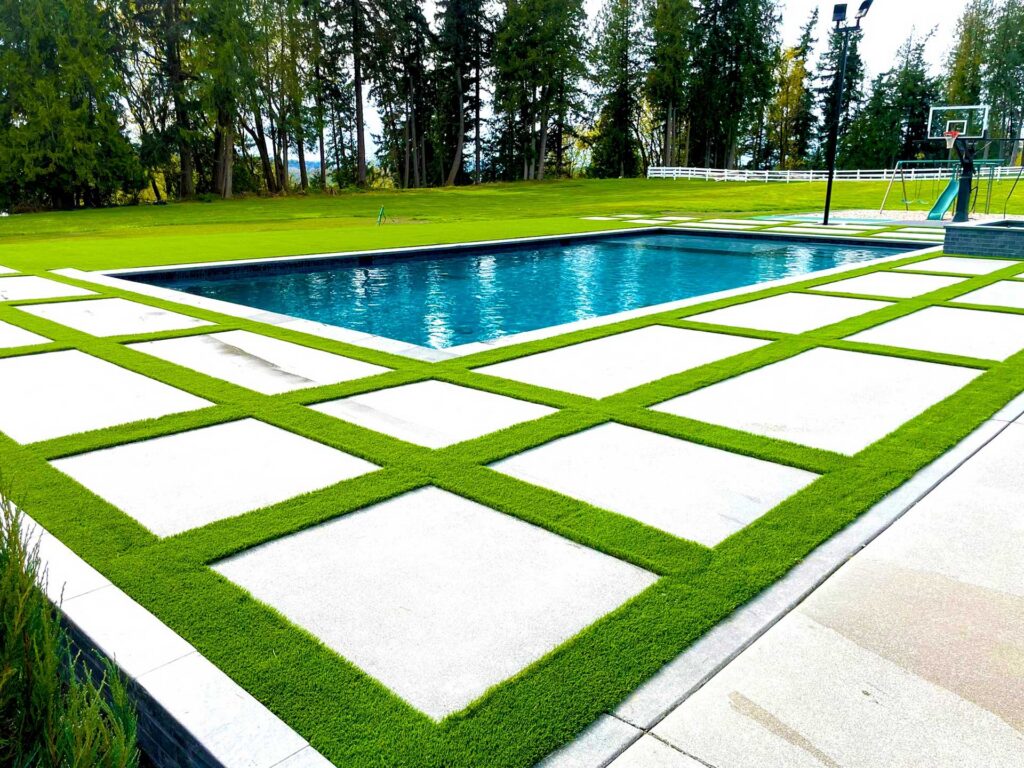
The point is that artificial turf does not have to be one-size-fits-all. When designed around how people actually use their outdoor space, it can become a much more useful feature of the property.
Where Synthetic Turf Can Hurt Resale Value
Does artificial grass increase home value? Yes, but not automatically. In some cases, it may work against you when it comes time to sell. Here are three of them:
- Poor Installation Quality: Uneven turf, visible seams, wrinkles, poor drainage, loose edges, or an unnatural appearance can make an otherwise attractive yard look cheap.
- Over-Turfing: Covering every inch of a property with artificial grass can take away from gardens, trees, patios, walkways, and other features. You need a thoughtful landscape design.
- HOA Conflicts: Some communities have specific requirements regarding landscaping materials, appearance, installation, or the percentage of turf allowed. If you do not follow them, you push your buyers toward a dispute with an HOA.
Why Installation Quality and Material Choice Matter
Artificial turf can last 10 to 15 years depending on the product, installation, use, and maintenance. That is a long time, so it is worth getting it right from the beginning.
Technically, you could make it a DIY project. However, it can look deceptively easy. You might choose the wrong type of turf for the space, underestimate how much material you need, cause drainage issues because of the slope, or use the wrong or insufficient infill. Weeds and undergrowth can also become a problem if the area underneath is not prepared correctly.
Professional installation takes much of that guesswork out of the equation. Experienced installers like Synthetic Turf Northwest have all the equipment, materials, knowledge, and crew. We also use only high-quality products! We’re also licensed and insured, and we provide a warranty for our services.
Rest assured you have nothing to worry about.
Let Us Talk About Artificial Turf ROI
Synthetic Turf Northwest has been serving homeowners and property owners since 1996. Our projects have included residential landscapes, pet areas, playgrounds, custom golf practice greens, sports spaces, and commercial properties. For guaranteed artificial turf resale value in Puget Sound, you can trust our team.
Get a free quote today to learn how a quality turf investment could pay off when you sell.