

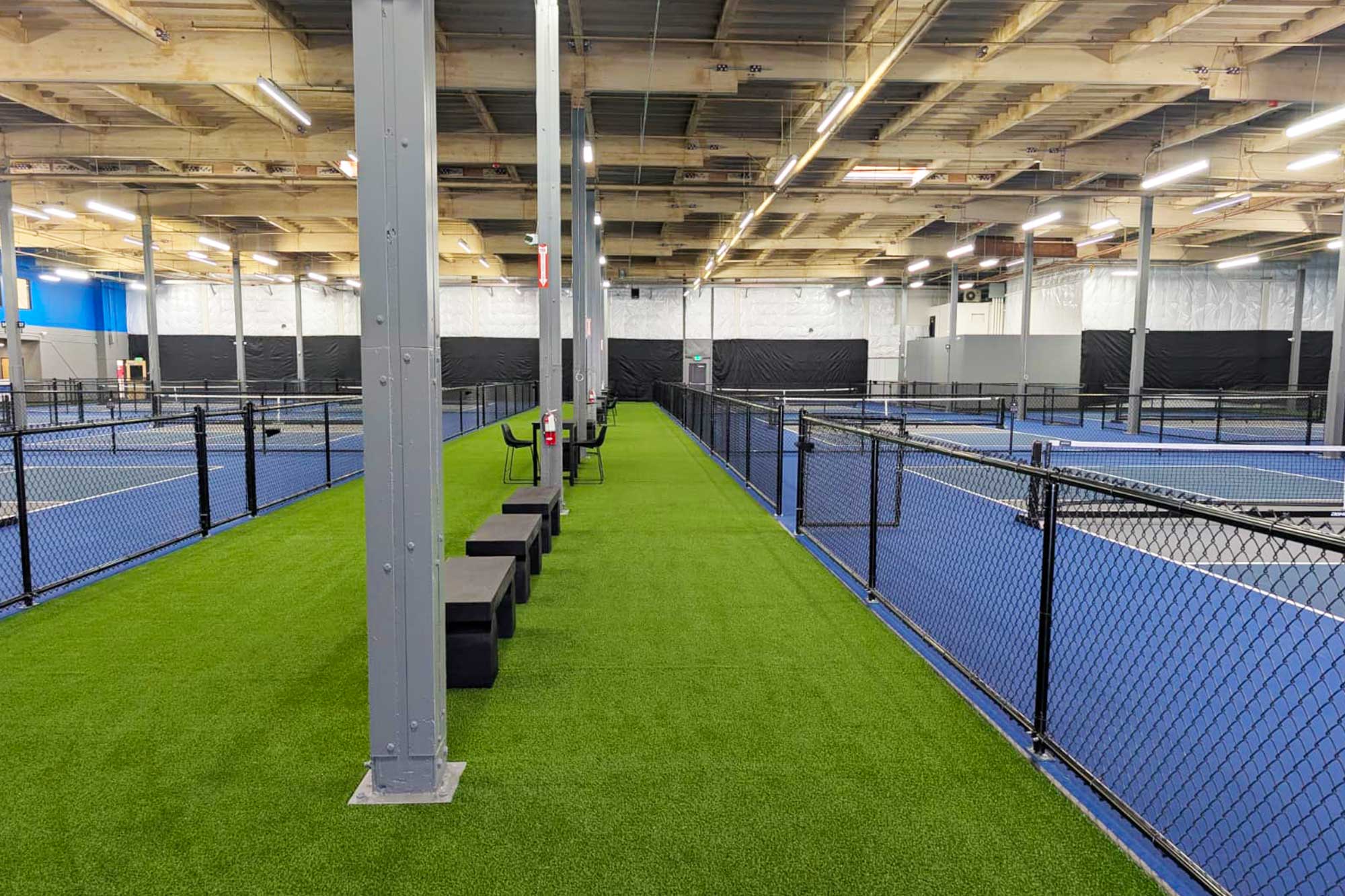
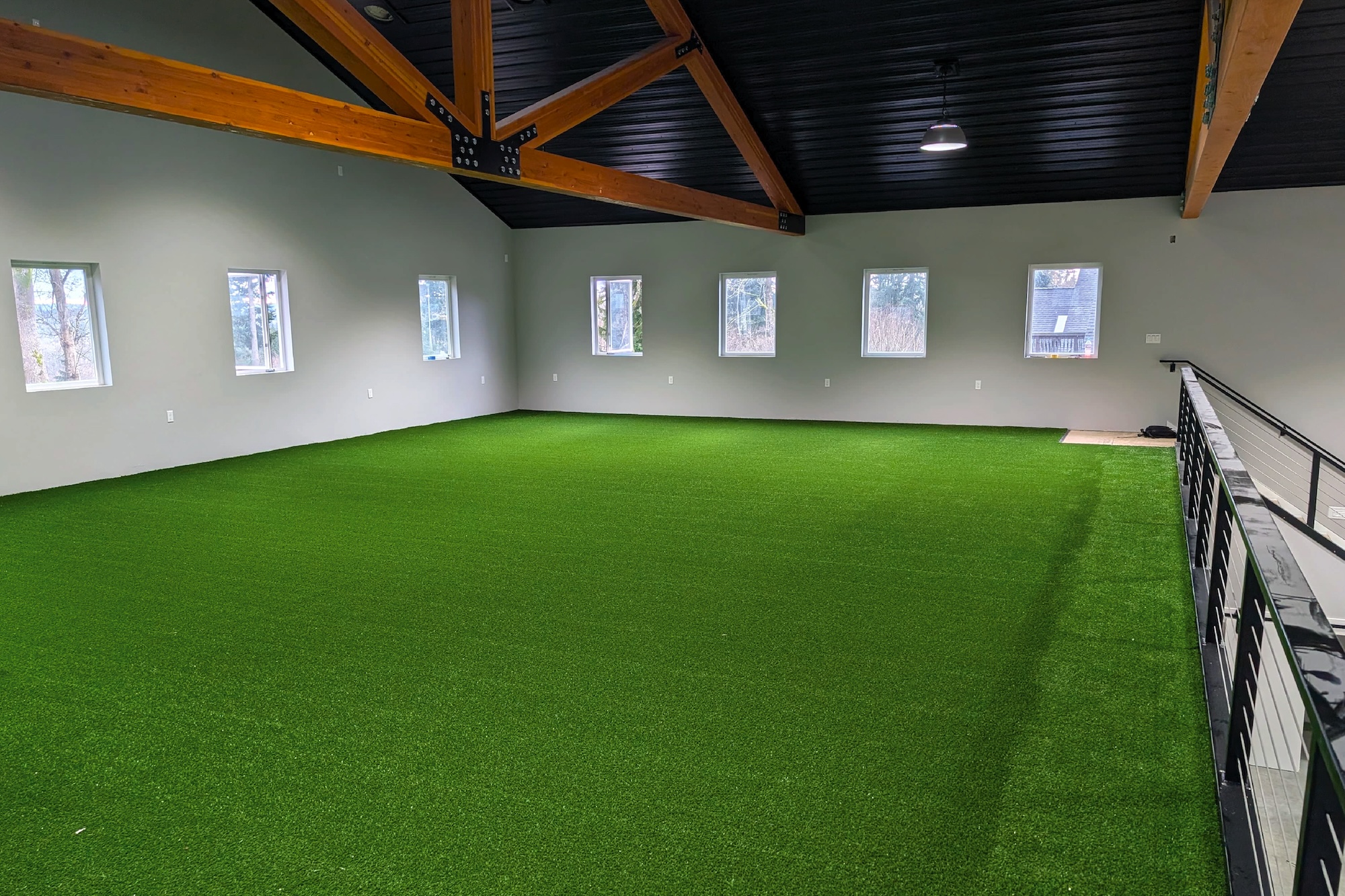
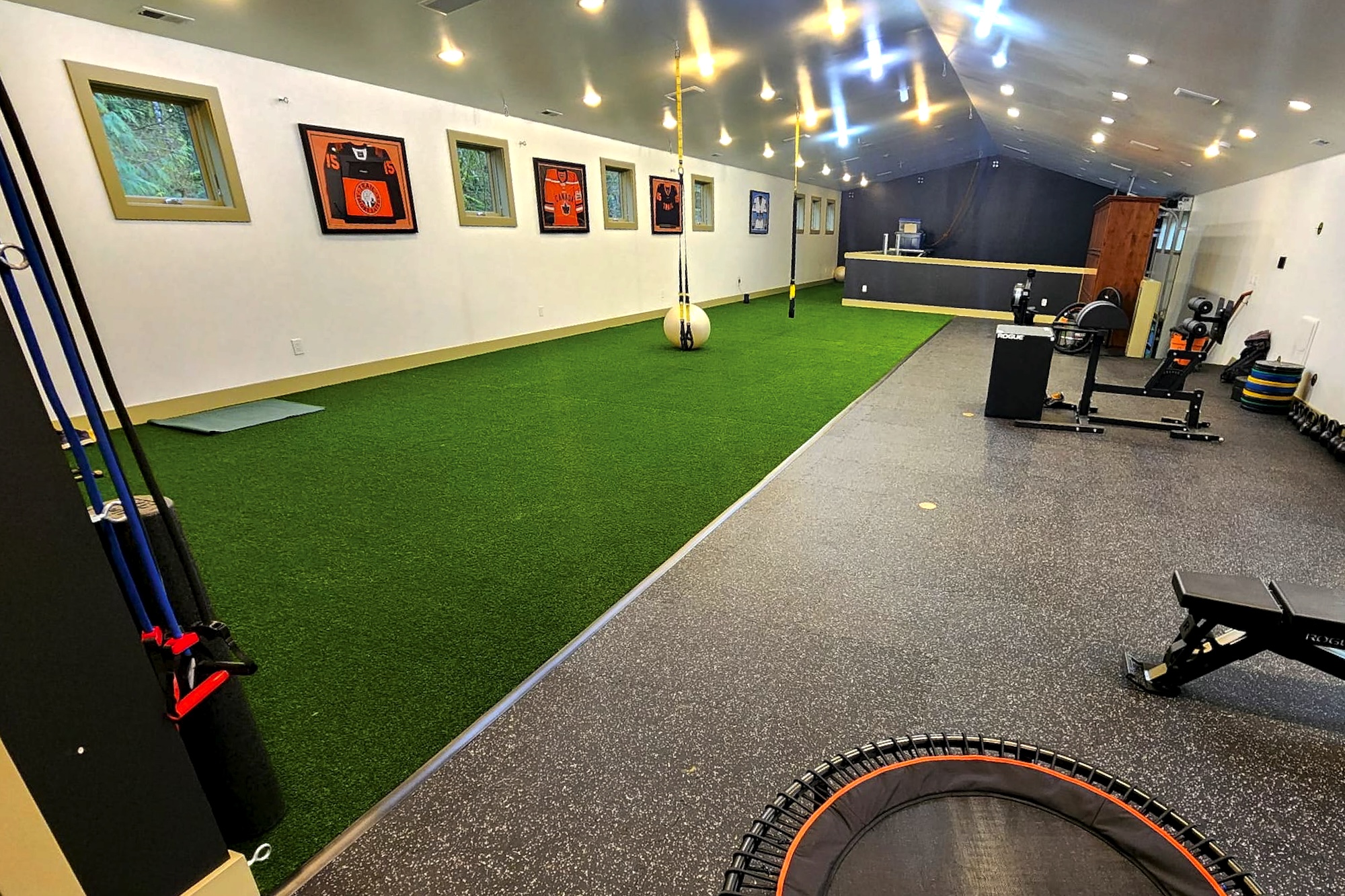
Synthetic Turf Northwest designs and installs premium indoor turf environments built for durability, versatility, and year-round use. From training facilities and fitness spaces to residential play areas and custom indoor putting greens, our indoor turf systems deliver the performance of outdoor surfaces with the convenience of indoor installation.
With over 30 years of experience serving the Pacific Northwest, our team combines high-quality materials with expert installation to create clean, functional indoor spaces that support athletic performance, recreation, and everyday use.
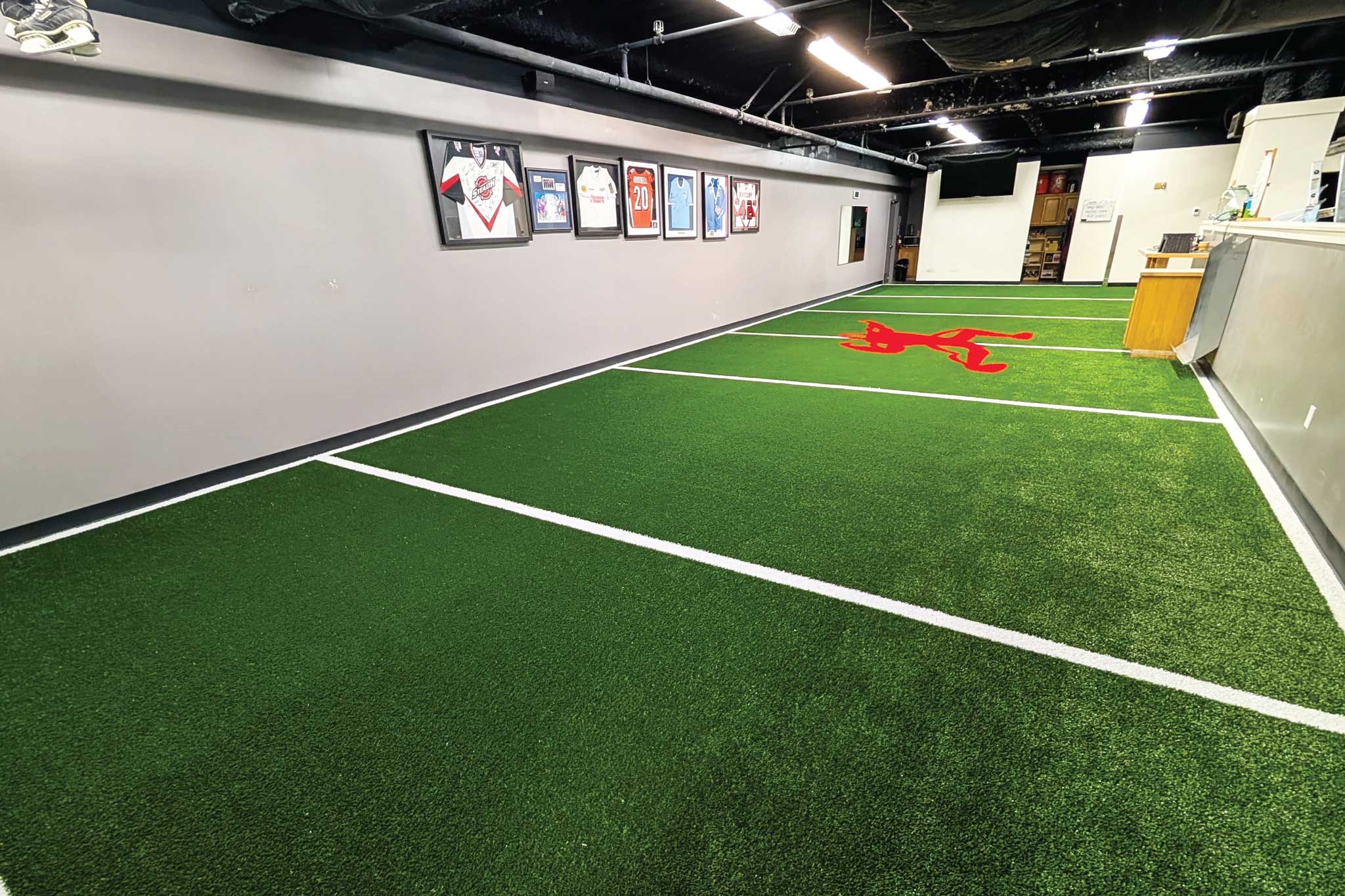
Every indoor turf installation begins with understanding how the space will be used. Whether you’re building a fitness area, training facility, putting green, or multi-purpose recreational space, our team evaluates layout, traffic flow, and performance goals to recommend the right turf system.
Indoor turf installations require precise preparation to ensure proper fit, safety, and performance. Our experienced installers focus on clean seams, secure placement, and professional finishing techniques that create a polished, functional environment.
We use premium indoor turf materials engineered for durability, hygiene, and long-term performance. Designed to resist wear and maintain appearance over time, each installation is backed by a 15-Year Turf Warranty, providing confidence in both quality and longevity.
Indoor synthetic turf is ideal for a variety of applications, including:
Every project is customized to balance durability, performance, and visual appeal.
Synthetic Turf Northwest installs your turf to last. Each installation is specially designed for your space. Below is our installation system for indoor spaces. This can vary depending on your space.
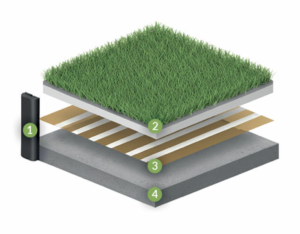
Indoor synthetic turf offers a versatile, low-maintenance surface designed for active Pacific Northwest lifestyles:
Common questions about turf materials, installation components, and how synthetic grass performs in the Pacific Northwest.
Sports and athletic training facilities, gyms and fitness studios, indoor putting greens, senior living and community common areas, corporate offices and lobbies, retail and event spaces, daycares, and residential rec rooms, garages, and basements. Anywhere a hard floor is unforgiving underfoot or a space needs to read green year-round, an indoor turf system works — and unlike outdoor turf it needs no drainage plan, which opens up rooms most surfaces can't go in.
It depends on the room. Indoor installations use one of three methods over a prepped subfloor: full adhesive glue-down for high-traffic and athletic spaces, a floating install where the subfloor can't be adhered to or the surface may change later, and double-sided tape for lighter-duty or temporary applications. A wall base finishes the perimeter. Subfloor prep — level, clean, dry — determines how the finished surface feels, so it's assessed before an installation method is chosen.
Yes. Gym and training installations use custom non-infill indoor turf — no sand or rubber to migrate across the floor, kick up during sled work, or end up inside equipment. It's engineered for durability and hygiene under heavy foot traffic, suits sled tracks, functional training zones, turf lanes, and full-field layouts, and can be laid out with inset lines or yardage markings. Backed by a 15-year warranty.
Yes — indoor putting greens are among the most common indoor installations, in homes, offices, clubhouses, and golf simulator rooms. With no drainage or gravel base to build, the constraint is ceiling height and floor area rather than site conditions, and contour can still be shaped into the underlayment for real break. Indoor greens pair naturally with a simulator setup, and the same golf turf used on outdoor greens is used inside.
Vacuum or sweep as you would a commercial carpet, spot-clean spills, and brush high-traffic lanes occasionally to keep the fibers standing. Because indoor systems are non-infill, there's no sand or rubber to top off and nothing to migrate onto the surrounding floor. The fibers resist matting and hold appearance under heavy foot traffic — which is why these systems land in gyms and senior living common areas where the surface is walked on all day.