

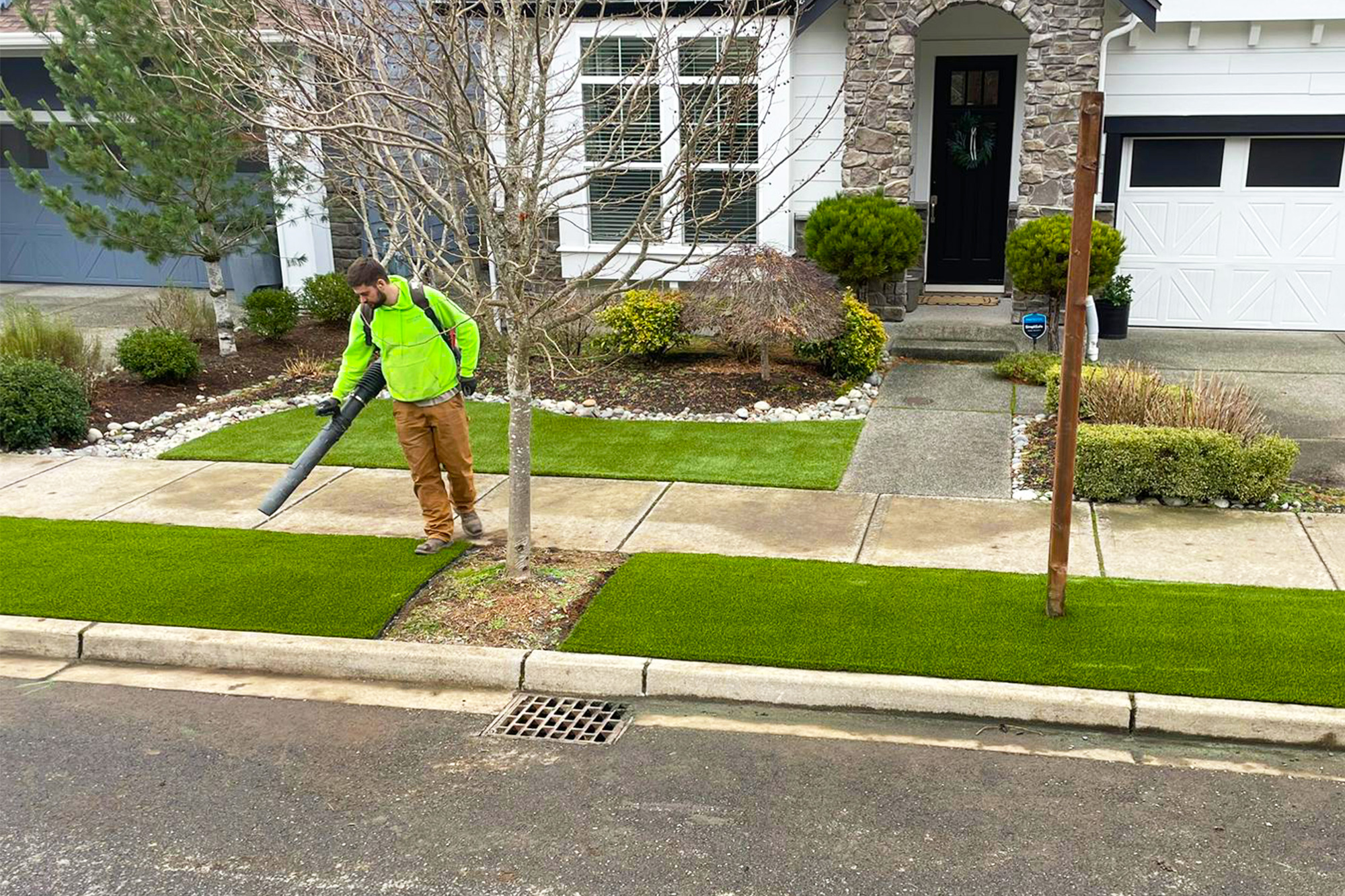
Artificial grass lawns are a low-maintenance alternative to natural grass. While they are much easier to look after, they still require some care. Plus, it’s important to recognize that synthetic turf has unique care requirements. Follow these artificial grass maintenance tips to maximize the life of your turf lawn and keep it looking its best.
Regular Maintenance for Artificial Grass
Regular artificial turf maintenance will keep your turf looking its best. This includes debris removal, fiber grooming, infill management, and prompt stain treatment. With proper maintenance and regular upkeep, the life of your synthetic lawn may extend a typical 10–15-year lifespan to 20 years or more. This also helps preserve function and creates a safer playing surface.
Remove Organic Debris Regularly
The Seattle area is rainy. Layers of leaves can trap moisture, and buildup causes problems like mold. So, clear larger debris, including fallen leaves, pine needles, and other debris. Use a leaf blower for dry material and a stiff-bristled broom or non-metal rake for safe debris removal without damaging grass blades. Weekly maintenance and regular cleaning help prevent decomposing debris, bacterial growth, and odors. Clearing buildup also helps protect the drainage system.
Pay Attention to The Edges of Your Synthetic Lawn
Edges tend to collect leaves and other organic debris. Check seams and edges regularly for minor repairs, such as loose seams or small tears. Pay particular attention to these areas when maintaining your lawn.
The edges are also more likely to see weed growth. Pull weeds from along the edges of your lawn when they appear. Apply pre-emergent weed control regularly and keep edges clear as part of a routine maintenance schedule to keep weeds at bay.
Brush Artificial Turf Regularly
The fibers of your artificial grass can flatten when there is heavy foot traffic, as the grass blades get matted down, especially in high traffic spots. Regular brushing once a month, including cross-brushing against the grain, helps keep the fibers upright and prevent matting.
Brushing also supports infill management by redistributing infill through and preserving drainage. By lifting matted turf fibers and surrounding them with infill, regular brushing or raking will restore the lively, natural appearance of your lawn. A stiff-bristled broom works well for smaller areas, while a power brush is useful for larger spaces or seasonal deep cleaning.
Artificial Lawn Weed Control
Artificial grass lawns can still get weeds. But turf materials are inherently weed-resistant. So, weeds are far less of a problem. What’s more, weeds growing on synthetic turf typically can’t get well-rooted, so they’re easy to remove.
To minimize spread, pull weeds as soon as you spot them. And follow up with pre-emergent weed control to suppress future weed growth.
Cleaning Synthetic Turf
Rinse Artificial Turf Regularly
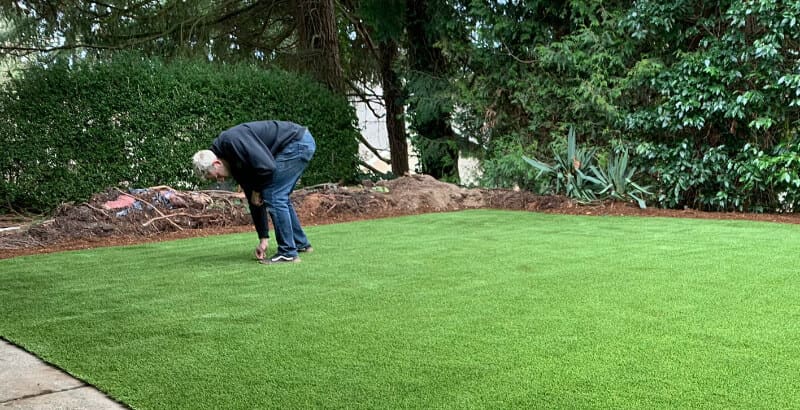
Use a garden hose or a power washer to lightly rinse of your synthetic turf to remove dust and light surface buildup. Rinsing helps remove dust and smaller debris, along with pollen, dirt, and some pet-related odors. In the Seattle area, the natural rainfall will actually do some of this work for you!
In high-traffic areas, occasional deep cleaning or a more thorough cleaning may be needed to maintain appearance and performance.
Spot Clean Your Artificial Lawn as Needed
From food spills to bird droppings and pet waste, your artificial lawn will inevitably need more than just a gentle rinse, especially for pet owners. Promptly remove solid waste and lightly rinse pet urine spots to help prevent pet odors and stubborn odors.
As with clothing, try to clean up spills when they happen, so the stain doesn’t get a chance to set. Use hot soapy water, mild detergent and a sponge for most stains, or a non-toxic mix of white vinegar and water to sanitize; enzyme cleaners can also help with pet urine residue. Avoid bleach and petroleum-based solvents. Once the stain is removed, rinse the area thoroughly with a hose to wash away any remaining detergent. Tough stains or stubborn stains like chewing gum and tree sap may require special treatment.
Long-Term Turf Care
- Apply weed and moss treatment at least twice a year as part of seasonal care
- Schedule deep cleaning periodically, especially for high-use areas, and consider professional maintenance services for a comprehensive cleaning and rejuvenation process that helps the turf remains safe and attractive for activities
- Book regular professional inspections for seam alignment, drainage checks, fiber rejuvenation, and consider infill redistribution, since professional turf installation and routine maintenance by trained technicians can extend the life and beauty of synthetic grass
- Keep grills, fire pits, and other hot items away from synthetic turf to avoid melting the plastic fibers, and watch for reflective windows that can magnify sunlight and cause heat damage
- Replace worn, high-traffic patches as needed to preserve a safe outdoor space
Equipment for Maintaining Artificial Grass:
- Blower, broom or rake
- A leaf blower is one of the most useful power tools for clearing dry leaves, dust, and removing debris
- Stiff-bristled broom or power brush
- Use a stiff-bristled broom for smaller areas, and a power brush for larger areas, grooming, and infill replenishment
- Hose or power-washer
- For regular cleaning and the occasional deep cleaning process to rinse away pollen, dust and dirt
- Gentle cleaner & sponge
- For spot cleaning stains
- Pre-emergent weed killer
- To reduce weed growth
- Moss treatment
- To eliminate moss
- Plastic shovel or broom
- For gentle winter snow removal without damaging the turf
- This is particularly important in rainy, wet climates like Seattle and across Puget Sound!
Conclusion
Artificial grass lawn care is easy. Compared to natural grass, synthetic turf maintenance will save you both time and money. (Read this article for more information on the cost of artificial grass installation.)
For semi-annual maintenance, repair work or general questions about synthetic turf, contact us.