

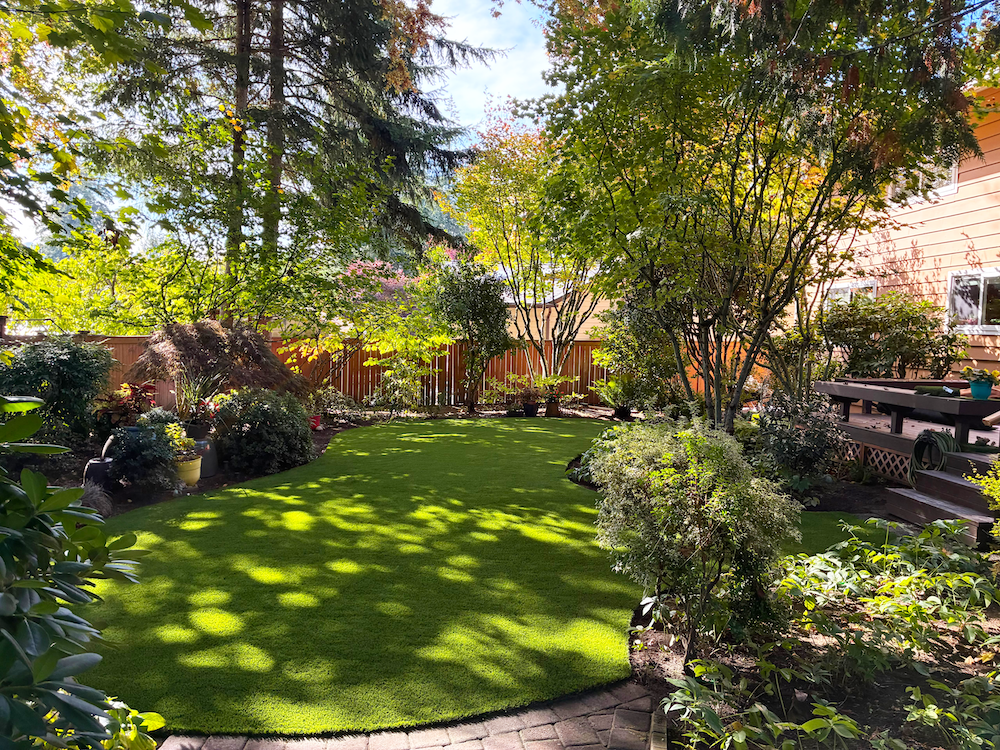
One of the most common questions we get is how much a backyard turf installation in Puget Sound costs. We get it if you’re wondering the same.
However, a more useful question is whether your yard can support turf. Your answer will not only determine the right kind of synthetic turf but also how much the installation will cost.
If your lot slopes, sits in shade, and rests on compacted subsoil, you pay for deeper excavation and a thicker base than your neighbor with the flat, sunny lawn.
Six conditions decide how your yard performs under synthetic grass. Walk through them, and you will know what to expect from backyard turf installation in the Puget Sound region.
How Much Direct Sun Your Yard Takes?
Turf holds heat. If your lawn faces south or west, you will feel the difference underfoot on a clear July afternoon, which is worth knowing before you turn the space over to kids or dogs.
Reflected light is your bigger concern. Modern energy-efficient windows bounce concentrated sunlight back into the yard, and a slightly bowed pane focuses that beam like a magnifying glass. The result is a narrow-scorched stripe tracking across otherwise perfect turf.
If your windows face the lawn, point them out at the site visit, so we can plan around the reflection path.
Where the Rain Goes After It Lands?
Synthetic grass drains through perforations into the base beneath it, so the base does the real work. Artificial turf drainage requirements come down to two things: whether the compacted gravel layer moves water sideways, and whether your yard has enough fall to send it somewhere.
Go outside during the next hard rain and watch.
If water runs toward a swale or the street, you are in good shape for winter. If it pools against your foundation, you need a drain line built into the base before you put down any turf.
What Sits Underneath Your Existing Lawn?
Dig two feet down in most of this region, and you hit something dense. It’s usually the glacially compacted subsoil layer common across the Puget Sound lowlands.
It typically starts 18 to 36 inches below the ground. It may also be far closer to the surface if your lot was cut and filled during development.
Hardpan blocks infiltration, which changes how we build your base. Your trees complicate things further, since mature cedars and maples run feeder roots through the top foot of soil, and cutting them carelessly harms the tree and leaves voids that settle under your lawn later.
Tree Cover, Moss, and Trapped Moisture
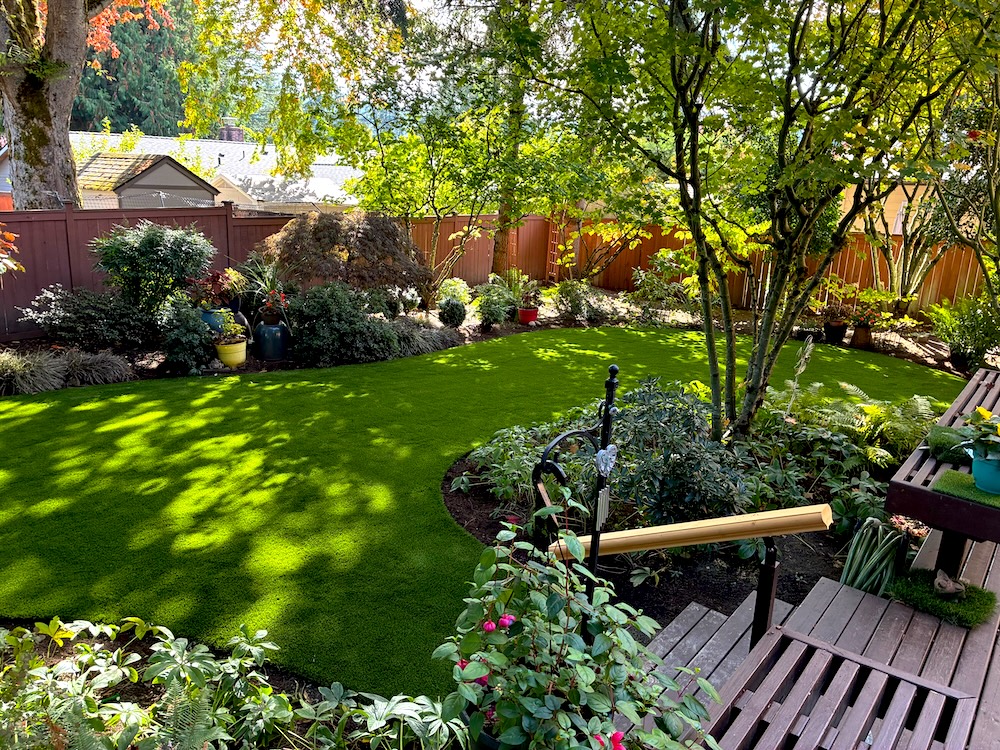
Heavy shade keeps your yard damp most of the year here. Turf will not rot, though moss finds the seams and low spots, and needle litter from your canopy breaks down into an organic layer that traps water against the fibers.
None of that rules out turf under your trees. It shifts your maintenance rhythm to seasonal blowoffs and occasional rinses, covered under turf maintenance and care. Dense conifer cover also calls for a coarser infill that resists compaction.
Yard Shape, Access, and Everything in the Way
Turf arrives in rolls up to 15 feet wide, so the more irregular your yard is, the more seams and waste you pay for. Narrow strips, tight side yards, and lawns broken up by beds raise your cost per usable square foot. Curved borders work with custom-cut turf products, though the cutting has to be right the first time.
Your access decides the labor line. A crew wheeling gravel through your side gate works faster than one hauling buckets through your garage.
Utility boxes, irrigation heads, and downspout outlets need to stay reachable, so we map them before the base goes in.
When We Tell Homeowners to Hold Off
Turf suits most yards. If you recognize your own in the list below, fix that first.
- Standing water that never clears: Puddles sitting for days after rain means your yard cannot meet artificial turf drainage requirements as it stands.
- An unresolved slope failure: Slumping, cracked retaining walls, or soil creeping downhill needs an engineer, not new surfacing.
- Roots you are unwilling to disturb: If a tree you love sits too close for safe excavation, protecting it may mean shrinking your turf footprint.
- HOA rules you have not read: The Washington landscaping statute limits what your association can prohibit, though it does not name synthetic turf specifically. Read your CC&Rs before committing.
- Permit questions left open: Larger projects in some jurisdictions trigger local stormwater review. Confirm with your city or county early.
What We Look for During a Free On-Site Visit?
We start where water collects, so we walk your perimeter first and note where the grade falls, where your downspouts discharge, and how the lawn drains toward the property line.
From there, we get into the ground itself. We check your soil texture by hand, look for the depth of any compacted layer, and measure the area properly instead of working from a satellite estimate.
As a result, you’ll know what your yard needs. If something needs to be fixed first, we tell you.
Is Your Backyard Turf-Ready? Let Our Team Find Out.
Sun, drainage, soil, shade, shape, and access decide whether your synthetic grass performs for 15 years or disappoints in three. Asking whether your yard is right for artificial turf before you compare prices puts you in a stronger position when the quotes arrive.
We have evaluated yards across communities around Puget Sound since 1996, and your backyard turf installation in the Puget Sound region starts with an honest read of your site.
Schedule your free assessment, and we will tell you where your yard stands.