

Installing artificial turf is a great way to enjoy a beautiful, low-maintenance lawn year-round. But while turf may seem like it can withstand it all, it’s not completely carefree. At Synthetic Turf Northwest, we’ve seen certain homeowner mistakes that can shorten the lifespan or affect the appearance of even the best-installed grass. One of the most surprising culprits? Your windows.
We spoke with Jessica Reyes, our Wholesale/Resale Coordinator, to help shed light (literally) on how window reflections damage and other common mistakes that can damage turf—and how to avoid them.
Window Reflections: A Hidden Threat to Artificial Grass
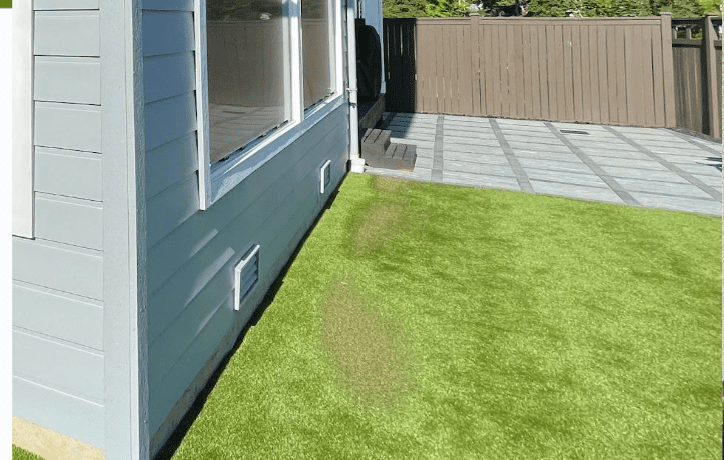
Artificial turf is engineered to be UV-resistant and weather-tough so, sunlight bouncing off windows might not seem like a big deal. But, the focused heat it creates can do serious damage to artificial grass. “Window reflection can cause the turf blades to ‘shrink’ in a line,” Jessica explains. “The blades look wilted.” Over time, this can result in permanent damage to the turf’s appearance and texture.
While the issue isn’t an everyday occurrence, it’s not a rare thing either. “This occurs on occasions but mainly during the summer season,” says Jessica. The problem tends to be worse in southeast-facing homes—where morning sun is most intense—and particularly with Low-E windows (low emissivity), which are designed to be energy efficient by reflecting heat away from the house. Low-E glass can create hot spots that damage turf focusing intense heat is like a magnifying glass that often end up on your artificial turf.
Warning Signs of Reflection Turf Damage
If you suspect your artificial turf might be suffering from solar heat, signs of melting turf include:
- Shiny or glossy blades and discoloration
- Crunchy texture
- Blades of artificial turf melting, curling or shriveling up
These symptoms usually appear in distinct lines or patches that align with where reflected sunlight off low-e glass windows causes artificial turf melting during peak hours.
Preventing and Fixing the Damage
The best way to avoid window-related artificial turf damage is to address the windows themselves. “There are ways to prevent reflective heat damage, and that would be adding a window film,” Jessica says.
Adding an anti-reflective or reflect defense window film, solar screens, or even exterior shades and landscaping can help minimize the infrared heat focused onto your yard. Trees and shrubs can diffuse concentrated reflections before they reach turf. Relocating reflective objects can also help reduce turf melting.
Many homeowners get creative in a pinch. “When a customer initially sees the turf start to burn, they’ll put a blanket on their window or a cardboard box on the area that is being affected,” Jessica adds. Heat-resistant turf options can improve resilience against melting, especially in recurring hot spots.
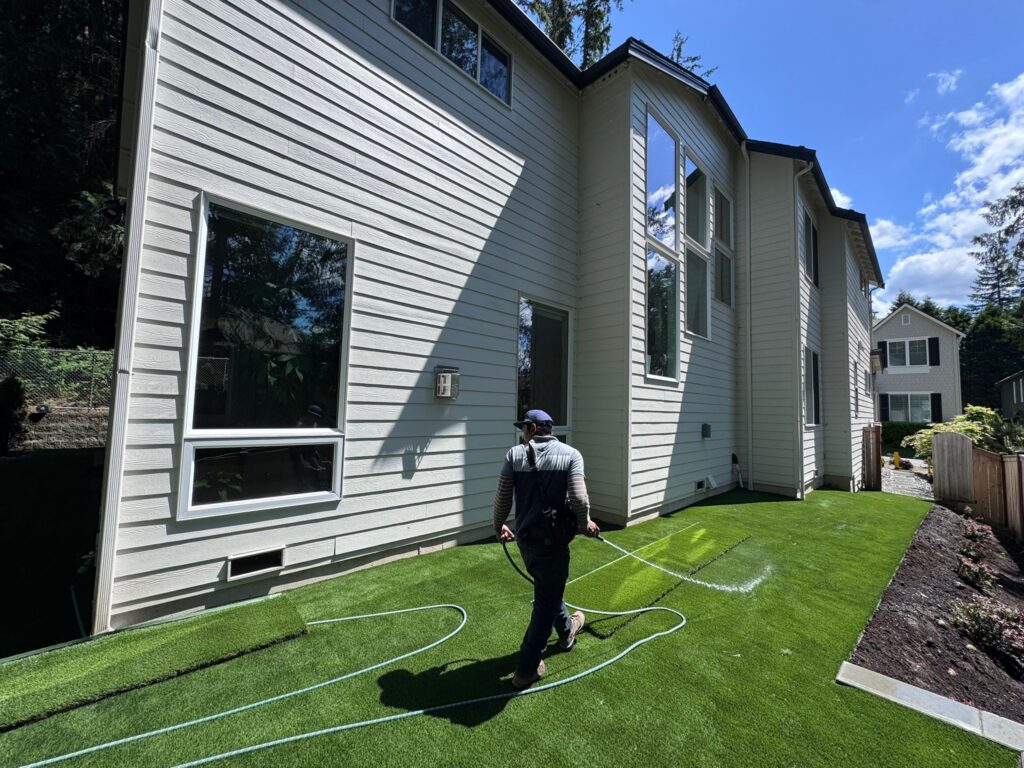
If damage has already occurred, it’s not too late. Synthetic Turf Northwest can repair the damaged areas, but there is one small additive: “Our team will need the windows to have the film installed first,” she emphasizes, “then they will patch it back up accordingly.”
Other Common Turf Mistakes Homeowners Make
Window reflections aren’t the only issue to watch out for. There are a few other common mistakes that can affect your synthetic lawn’s health and appearance.
Skipping Maintenance
One major myth is that turf is maintenance-free. “The most misunderstood part of synthetic turf care would be that turf doesn’t need care,” Jessica says. “But the upside is that it is very low maintenance.”
A key part of turf protection and upkeep is staying ahead of moss and weed growth. “A common mistake we see customers run into is not keeping up with their two-times-a-year moss out and weed treatment,” she says. Without regular treatments, moss and weeds can creep in and break down the turf backing over time.
Her recommendation? Use products like Preen for weed control and a moss treatment (especially in shady, damp areas) twice a year to prevent artificial turf degredation.
Improper Base Prep
Another common pitfall happens before the turf even goes in. “It is very crucial to have a proper base before installing the turf,” Jessica explains. “The turf needs the proper drainage to avoid bacteria and mold.”
A properly installed base usually includes a layer of crushed rock and sand, leveled and compacted to allow for drainage and to support the turf’s structure. If skipped or poorly done, you risk bad smells, pooling water, and uneven surfaces—not to mention voiding warranties.
Warranty Mistakes and Misconceptions
Synthetic Turf Northwest offers robust warranty coverage:
- 10-year limited warranty on turf material (surface and fading)
- 5-year warranty on installation if performed by STNW
However, there are a few things that can void your warranty—sun/reflection damage, animal damage, vandalism, or even improper maintenance by someone other than Synthetic Turf Northwest.
Jessica also adds: “NEVER pressure wash your green!” It may seem like a fast cleanup trick, but the intense water pressure can damage the turf fibers and affect the infill.
And if you thought vacuuming was a good idea? Think again. “Some myths would be that you can vacuum your turf, which is false,” says Jessica. “The turf infill can damage your vacuum, and it will also affect the look of your turf.”
One more myth? That pet waste just drains away. While turf is designed to drain liquids, solid waste must be picked up to keep your lawn clean and odor-free. “Another misconception would be that pet droppings—the solid—will drain through, which is incorrect,” she notes.
Jessica’s Top 3 Tips
If you want to get the most out of your artificial grass, here are Jessica’s top three tips:
- Apply moss and weed treatment twice a year – Stay ahead of growth that can harm the backing of the turf.
- Use a stiff-bristle broom or power broom – This helps fluff up the blades and remove heavy debris, especially in high-traffic areas to keep its aesthetic appeal.
- Scoop pet droppings frequently – Just like with Real grass, regular cleanup is key for turf health and smell.
Synthetic turf is a popular landscaping choice because it is durable, clean, and beautiful—but like anything outdoors, it needs a little care. Homeowners who ignore issues like window reflections, weed buildup, or improper drainage may find themselves dealing with preventable damage. By staying on top of simple maintenance and understanding how your surroundings—like direct sunlight—interact with your lawn, you’ll keep your turf looking green and fresh for years to come.
Need help with turf repair, or wondering if your lawn is at risk for reflective heat damage? Contact Synthetic Turf Northwest today—we’re happy to assess your setup and help you find long-lasting solutions.
.