

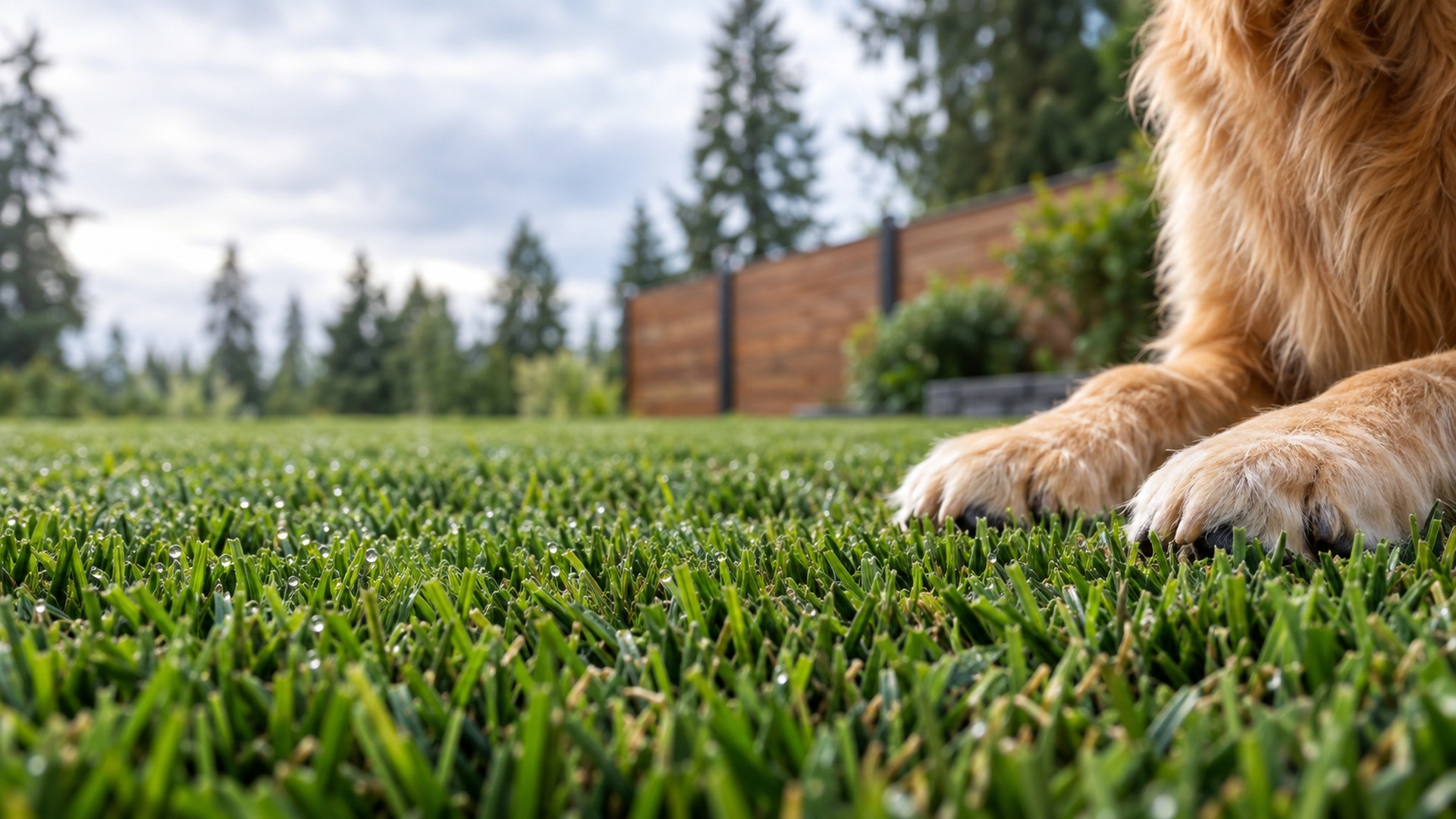
Every homeowner dreams of having a lush yard, but nobody dreams of the labor. When the weather turns hot, real grass needs large amounts of water to stay alive. When the rain takes over, you get muddy patches, standing water, and contamination concerns. Don’t forget regular mowing, fertilizing, weeding, and seasonal repairs. Unsurprisingly, more homeowners are switching to artificial turf.
Still, moisture, organic material, and environmental bacteria remain concerns. As a result, manufacturers have introduced “antimicrobial” artificial turf to the market. Is it just a marketing buzzword, or does it provide real value? At Synthetic Turf Northwest, it is the latter.
“Antimicrobial” in Turf Manufacturing
The word “antimicrobial” is an umbrella term for anything that kills microbes. So, when you hear “antimicrobial turf,” it means artificial turf with materials that inhibit the growth of microorganisms. Antimicrobial protection comes from additives or treatments that are incorporated into different parts of the turf system, such as the backing, infill, or surface coating.
The turf fibers are the part you see every day. Some manufacturers integrate antimicrobial additives directly into the surface coatings where people and pets have the most contact. Beneath such fibers is the backing, which holds every blade securely in place. It also allows water to flow through the turf instead of collecting on the surface. Because this layer is regularly exposed to moisture, it benefits from antimicrobial treatments.
Antimicrobial infill material between the grass blades helps the fibers stay upright, adds weight to keep the turf stable, cushions foot traffic, and distributes pressure more evenly across the surface. At the bottom of the system is the compacted base and sub-base. While you cannot see it once the installation is finished, a well-built one is one of the biggest factors in the long-term performance of artificial turf.
What Antimicrobial Turf Protects Against?
rtificial turf experiences sunshine, rainfall, irrigation, humidity, fluctuating temperatures, falling leaves, airborne dust, pet urine, organic debris, and other waste. Whenever moisture, warmth, and organic material come together, microorganisms naturally develop.
Antimicrobial protection helps manage those microorganisms before they multiply and bring the following:
- Bacteria Growth: Bacteria exist everywhere. Most are completely harmless, while others can contribute to hygiene concerns.
- Mold: Synthetic grass itself does not grow mold the way real grass can, but moisture trapped among leaves, soil particles, or other organic debris can create favorable conditions for mold development.
- Odor-Causing Organisms: Any artificial turf bacteria odor is unpleasant, making the outdoors a space you would rather avoid than enjoy for hours.
How does it work? Antimicrobial properties interfere with the normal life cycle of microorganisms. They damage protective cell membranes, make it harder for microbes to reproduce, and stop small groups from growing into much larger colonies.
What Antimicrobial Turf Does Not Do?
It is crucial to remember that a turf product that includes antimicrobial technology is not a disinfectant. It will not instantly kill every germ that lands on the surface, nor does it eliminate the need for regular maintenance.
Your antimicrobial artificial turf still requires routine cleaning to remove anything that can create unsanitary conditions. Pick up solid waste immediately and rinse liquid waste periodically according to the manufacturer’s recommendations.
Antimicrobial protection is just one layer of defense, not a replacement for anything.
Why Choose Antimicrobial Turf?
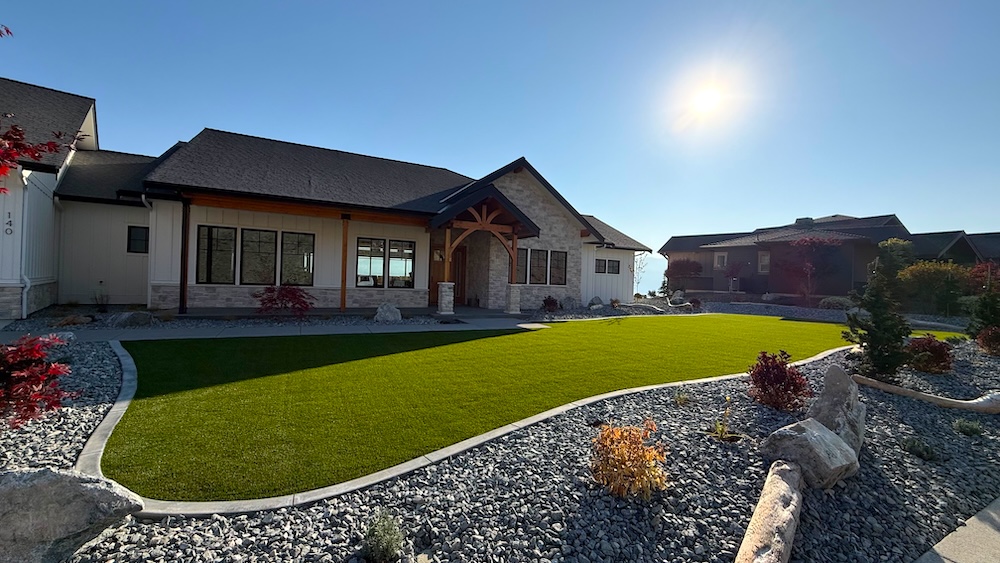
At this point, you might be wondering, “Why not simply install any artificial turf?” For some, standard turf may be perfectly suitable. However, antimicrobial protection becomes much more valuable when the lawn experiences heavier daily use.
Pet owners are one of the biggest examples. Dogs spend a lot of time outdoors, and repeated exposure to pet waste naturally introduces moisture and organic material into the turf system, eventually harming everyone. Busy households and light-commercial property owners benefit, too, whether it is children playing outside, backyard gatherings, or golfers constantly walking across.
Antimicrobial turf in high-traffic areas helps maintain a cleaner, more hygienic environment. It also lasts a long time, from 10 to 15 years. Without a doubt, it is something that provides real value.
Verifying a Manufacturer’s Antimicrobial Claims
Any turf manufacturer can advertise that its product includes antimicrobial protection. Before purchasing, it is wise to verify the claims.
Ask whether the product has been evaluated according to recognized industry testing standards or carries certifications from independent organizations. These evaluations help demonstrate that the antimicrobial properties have actually been measured.
Remember, a trustworthy manufacturer should welcome the opportunity to explain how its products are engineered.
Synthetic Turf Northwest’s Product Lineup
Since opening our doors in 1996, Synthetic Turf Northwest has proudly served homeowners and businesses throughout Puget Sound. We have always focused on quality, realistic-looking, and environmentally responsible artificial turf.
Our HeatGuard Pro Series, Playground Series, Golf / Putting Series, Indoor Turf Series, Summer Blend Series, and Plush Series all feature antimicrobial and non-toxic additives and treatments integrated directly into the turf fibers during manufacturing. As we expand our selection, rest assured we will continue to include the same advantageous technologies.
Explore Your Antimicrobial Turf Options
If you are interested in learning more about antimicrobial turf and finding the right product for your property, Synthetic Turf Northwest is here to guide you. Whether you are upgrading a backyard or building a playground with a custom putting green, our experienced team can answer your questions, discuss the differences between available options, and recommend solutions.
Call us today at (425) 788-0718 to speak with one of our specialists, or request a free quote online. We are ready to start a turf project with you.